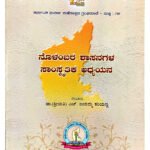
Nolamba Dynasty Inscriptions Cultural Study Book
The nolamba dynasty inscriptions is a deeply insightful and academically rich exploration of one of the lesser-known yet historically significant dynasties of South India. The Nolamba dynasty, which played an important role in shaping regional administration, culture, and religious traditions, is brought into focus through carefully studied inscriptions and cultural analysis. This book stands out as a valuable contribution to the fields of epigraphy, archaeology, and Kannada historical studies.
One of the most impressive aspects of this nolamba dynasty inscriptions is its comprehensive interpretation of inscriptions related to the Nolamba period. Inscriptions are among the most reliable historical sources, and this book takes great care in presenting them with accuracy and clarity. It not only reproduces the epigraphic content but also explains its meaning in a structured and understandable manner. This allows readers to engage directly with historical evidence while gaining deeper insights into its significance.
The nolamba dynasty inscriptions provides a detailed examination of the evolution of language during the Nolamba rule. Through inscriptional evidence, it highlights how Kannada and related regional dialects developed over time. The linguistic analysis helps readers understand the transition of script styles, vocabulary usage, and administrative terminology. This makes the book especially useful for Kannada scholars and linguists who are interested in tracing the historical development of the language.
Another strong feature of the nolamba dynasty inscriptions is its focus on regional traditions and cultural practices. The Nolamba inscriptions reveal valuable information about festivals, rituals, temple activities, and community life. By interpreting these references, the book paints a vivid picture of how people lived during that era. It helps readers understand the cultural richness and diversity of ancient Karnataka and its neighboring regions.
The book also offers significant insights into the governance patterns and administrative systems of the Nolamba dynasty. Inscriptions often document land grants, taxation policies, military organization, and royal decrees. Through these records, the author explains how the dynasty maintained order and managed resources. This analysis provides a clear understanding of the political structure and administrative efficiency of the time, making it a valuable resource for students of history and political systems.
Religious practices during the Nolamba period are another important focus of this study. The inscriptions highlight the patronage of temples, support for religious institutions, and the coexistence of different belief systems. The book carefully interprets these references to show how religion played a central role in shaping society, culture, and governance. This adds depth to the understanding of spiritual and cultural life during the dynasty’s rule.
The study also emphasizes artistic and architectural expressions reflected in inscriptional records. References to temple construction, sculptural contributions, and cultural patronage are analyzed in detail. This helps readers appreciate the artistic achievements of the Nolamba period and their contribution to Karnataka’s architectural heritage. The connection between art, religion, and governance is well explained, offering a holistic view of cultural development.
One of the key strengths of this book is its clear interpretation and structured presentation. Complex historical and epigraphic content is broken down into readable sections, making it accessible not only to researchers but also to students and general readers. The balance between academic depth and readability is maintained effectively, ensuring that the content remains engaging and informative.
For historians, archaeologists, Kannada scholars, and cultural researchers, this book serves as an essential reference material. It compiles authentic inscriptional data and presents it in a meaningful historical framework. The reliability of sources and attention to detail make it a trustworthy academic resource for further research and study.
Beyond its academic value, the book also plays an important role in preserving and promoting Karnataka’s cultural heritage. By documenting and analyzing Nolamba inscriptions, it helps preserve historical knowledge that might otherwise remain obscure. It strengthens the understanding of regional history and highlights the importance of inscriptional studies in reconstructing the past.
Overall, the Nolamba Dynasty Inscriptions Cultural Study Book is a powerful and positive contribution to Kannada epigraphy and cultural history. It successfully bridges the gap between ancient inscriptions and modern historical understanding. Through its detailed analysis of language, governance, religion, and culture, it offers a complete and enriching view of the Nolamba period.
This book is highly recommended for anyone interested in South Indian history, epigraphy, or cultural studies. It stands as a valuable academic work that deepens knowledge while honoring the rich legacy of the Nolamba dynasty and its contributions to Karnataka’s historical and cultural landscape.
Check other KHRS Books here
Read more about Nolamba Dynasty here




Reviews
There are no reviews yet.