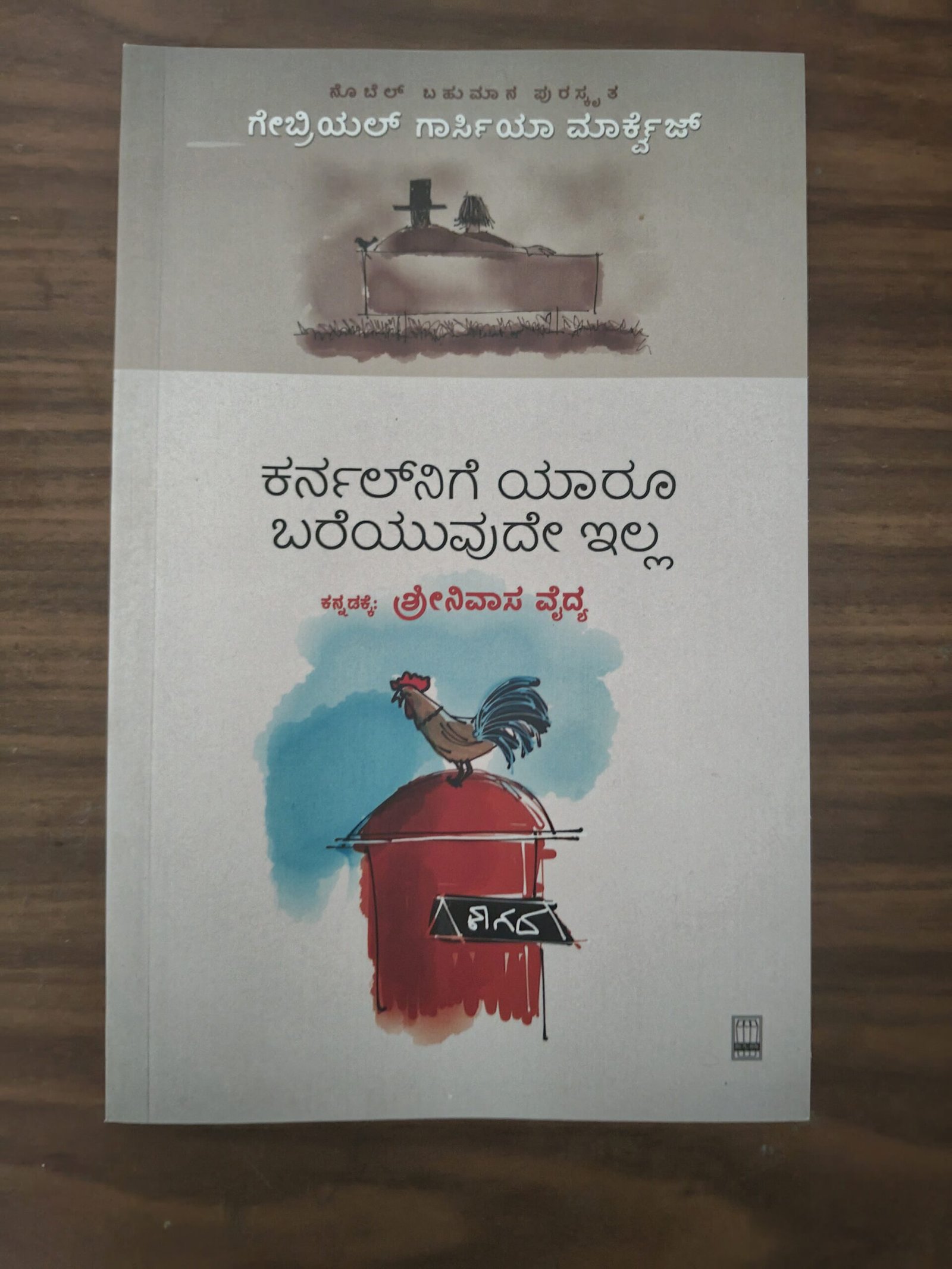
No One Writes to the Colonel – Translation by Shrinivas Vaidya – ಕರ್ನಲ್ ನಿಗೆ ಯಾರೂ ಬರೆಯುವುದೇ ಇಲ್ಲ
No One Writes to the Colonel (ಕರ್ನಲ್ ನಿಗೆ ಯಾರೂ ಬರೆಯುವುದೇ ಇಲ್ಲ), written by Gabriel García Márquez and translated into Kannada by Shrinivas Vaidya, is a deeply moving novella that explores hope, dignity, poverty, and the quiet endurance of the human spirit. Originally published in Spanish as No One Writes to the Colonel, this masterpiece has touched readers across the world, and the Kannada translation beautifully brings its emotional depth and literary elegance to regional readers.
Set in a small Colombian town, the story revolves around an aging colonel who has spent decades waiting for a pension promised to him for his service in the civil war. Every Friday, he walks to the dock expecting a letter from the government confirming his pension approval. Yet week after week, month after month, and year after year, the letter never arrives. This simple yet powerful premise becomes a metaphor for patience, faith, and the crushing weight of bureaucratic indifference.
The colonel and his wife live in poverty, struggling to survive with dignity. They sell their belongings one by one to afford food and basic necessities. Despite their hardships, the colonel remains hopeful and refuses to give up his belief that justice will eventually prevail. His unwavering optimism contrasts sharply with the harsh reality of their circumstances, creating a poignant emotional tension that drives the narrative.
What makes this No One Writes to the Colonel extraordinary is its minimalistic yet deeply expressive style. Unlike many of Márquez’s later works known for elaborate magical realism, this story adopts a stark, restrained tone. The language is simple, but every sentence carries emotional weight. The Kannada translation No One Writes to the Colonel preserves this clarity and lyrical beauty, allowing readers to fully experience the quiet power of the original text.
At its core, the No One Writes to the Colonel book explores the theme of waiting—not just for a letter, but for recognition, dignity, and fairness. The colonel’s wait becomes symbolic of the struggles faced by countless individuals who are overlooked by systems meant to support them. His weekly ritual of visiting the dock reflects the persistence of hope even in the face of repeated disappointment.
The relationship between the colonel and his wife adds another layer of emotional depth. While she is practical and often frustrated by their dire situation, she still supports her husband’s hope. Their conversations reveal the strain of poverty, yet they also show love, resilience, and companionship. Their shared struggle highlights the emotional toll of living in uncertainty and deprivation.
One of the most powerful symbols in the No One Writes to the Colonel book is the fighting rooster left behind by their deceased son. The rooster represents hope, pride, and the possibility of a better future. Despite their hunger, the colonel refuses to sell it, believing it will win prize money in future cockfights. This decision reflects his refusal to surrender hope, even when survival seems impossible.
The socio-political undertones of the story are subtle but impactful. The novella reflects the realities of post-war Latin America, where many veterans were forgotten by the governments they served. Through the colonel’s experience, Márquez critiques bureaucratic neglect, social inequality, and the indifference of institutions toward ordinary people.
The Kannada translation makes this global story feel close and relatable. Readers can easily connect the colonel’s struggles with familiar social realities, making the narrative both universal and deeply personal. The translation ensures that the emotional resonance and literary beauty of the original work remain intact while making it accessible to Kannada readers.
This book is ideal for students, literature lovers, and anyone who appreciates meaningful storytelling. Though compact in length, it leaves a lasting emotional impact. It invites readers to reflect on hope, patience, dignity, and the quiet strength required to endure life’s uncertainties.
Ultimately, No One Writes to the Colonel is a timeless story about resilience. It reminds us that hope can survive even in the harshest conditions and that dignity can persist even in poverty. Through its simple narrative and profound themes, the novella continues to inspire readers across cultures and languages, making it a must-read literary classic
Check other Kannada books here
Read more about Colonel here

![Why No One Writes to the Colonel is a Timeless Masterpiece [ಕರ್ನಲ್ ನಿಗೆ ಯಾರೂ ಬರೆಯುವುದೇ ಇಲ್ಲ] - Image 2](https://anuvirat.com/wp-content/uploads/2025/07/No-One-Writes-to-the-Colonel-2-scaled.jpg "Why No One Writes to the Colonel is a Timeless Masterpiece [ಕರ್ನಲ್ ನಿಗೆ ಯಾರೂ ಬರೆಯುವುದೇ ಇಲ್ಲ] 2")







![Why No One Writes to the Colonel is a Timeless Masterpiece [ಕರ್ನಲ್ ನಿಗೆ ಯಾರೂ ಬರೆಯುವುದೇ ಇಲ್ಲ]](https://anuvirat.com/wp-content/uploads/2025/07/No-One-Writes-to-the-Colonel-1-150x150.jpg)
Reviews
There are no reviews yet.