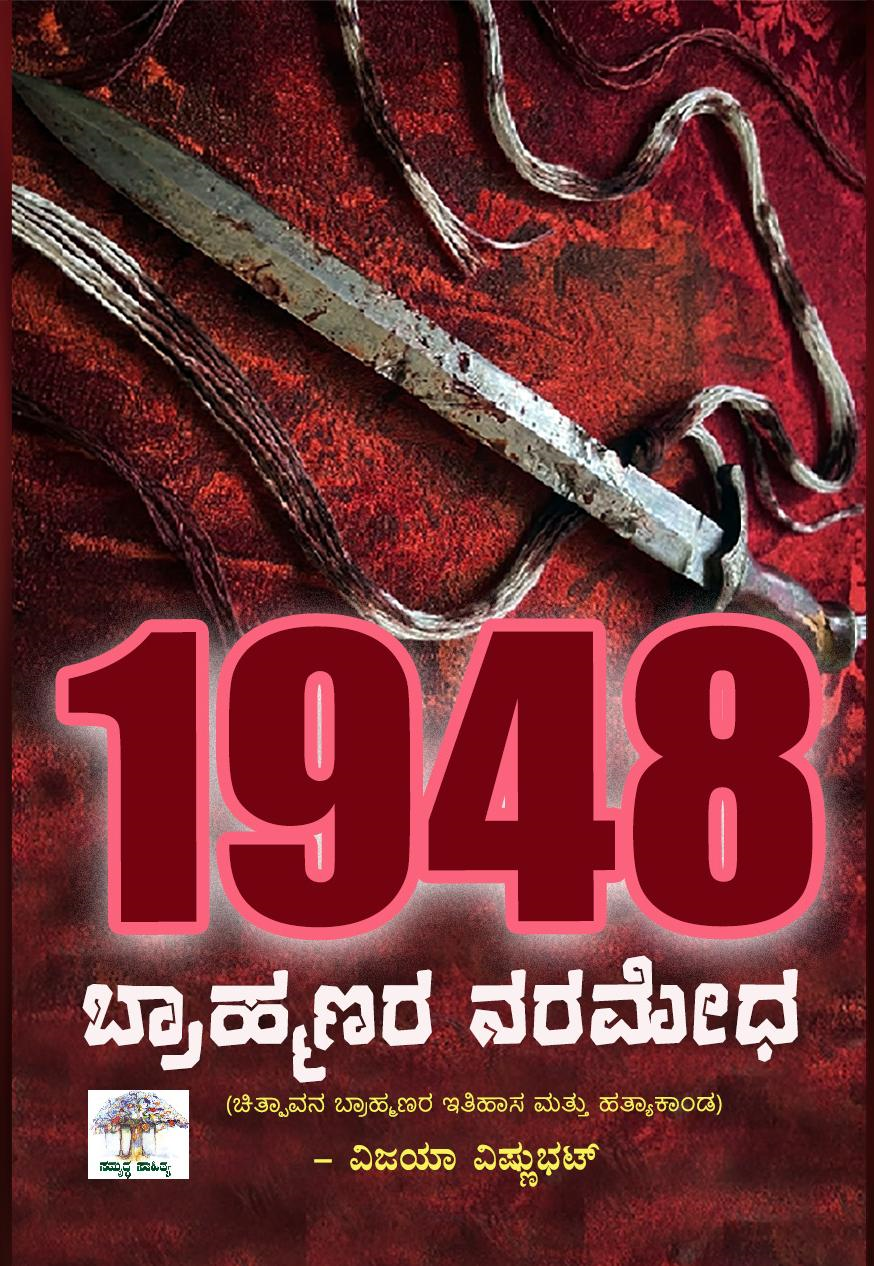
Brahmanara Naramedha Kannada book
Brahmanara Naramedha Kannada book (ಬ್ರಾಹ್ಮಣರ ನರಮೇಧ) is a Kannada-language historical work by author Vijaya Vishnubhat, published by Samrudha Sahithya, documenting the events of 1948 and their impact on the Chitpavan Brahmana community. Spanning 280 pages, this book presents a detailed historical account of a turbulent and often under-discussed chapter of post-independence Indian history, offering readers access to a perspective and body of documented events that many mainstream historical narratives have left largely unexamined.
About the Book
Set against the backdrop of the events following Mahatma Gandhi’s assassination in January 1948, this Brahmanara Naramedha Kannada book chronicles the wave of violence, displacement, and social upheaval that affected Chitpavan Brahmana families and communities, primarily across Maharashtra, in the aftermath of that period. Drawing on historical research and documented accounts, the author presents a narrative aimed at preserving this history for readers and researchers who wish to understand this period from the perspective of the communities directly affected by it.
As a work of historical non-fiction, the book contributes to an ongoing and often debated area of Indian historical discourse. Readers interested in twentieth-century Indian social history, caste and community dynamics in post-independence Maharashtra, and the broader socio-political aftermath of Gandhi’s assassination will find this book a substantive addition to their reading and research material.
Why Read This Book
- In-depth historical documentation: At 280 pages, the Brahmanara Naramedha Kannada book offers substantial detail rather than a brief overview, making it suitable for serious readers, students of history, and researchers.
- Kannada-language accessibility: Written in Kannada, this book brings a historically significant and often Marathi/English-documented subject to Kannada-speaking readers, broadening access to this history within Karnataka and the wider Kannada-reading community.
- A perspective-driven historical account: Like many works covering contested or painful periods of history, this Brahmanara Naramedha Kannada book presents its subject through a specific lens — that of documenting harm experienced by the Chitpavan Brahmana community during this period. Readers are encouraged to engage with it as one account among the broader, multi-perspectival historical record of this era, alongside other historical works covering the same period from different vantage points.
Who This Book Is For
- Readers interested in twentieth-century Maharashtra and Indian social history
- Students and researchers of caste, community, and post-independence Indian socio-political history
- Kannada readers seeking historical non-fiction on subjects not widely covered in regional-language publishing
- Those interested in oral and community histories surrounding the 1948 period
Publication Details
- Author: Vijaya Vishnubhat
- Publisher: Samrudha Sahithya
- Language: Kannada
- Pages: 280
- Genre: History / Non-fiction
A Note on Reading This History
Historical works covering communal violence, political assassination, and their aftermath are, by nature, part of a larger and often contested historical conversation. We encourage readers to approach this book as a documented account from a specific community perspective and, where possible, to read it alongside other historical sources covering the same period, to form a well-rounded understanding of this complex chapter in Indian history.
Order Your Copy
Add this significant piece of Kannada historical literature to your collection. Whether you’re a student of history, a researcher, or a reader seeking regional-language access to under-documented historical narratives, Brahmanara Naramedha offers a substantial, focused account of a defining moment in post-independence India.
Preserving Regional Historical Memory
Works like Brahmanara Naramedha play an important role in regional-language publishing, ensuring that community-specific historical experiences are not lost to time or overshadowed by broader national narratives. By making this history accessible in Kannada, the book invites a new generation of readers to engage critically with India’s complex twentieth-century past, encouraging thoughtful discussion, further research, and a deeper appreciation of how local histories shape our collective understanding of the nation’s journey.
Check other books here
Read more about Genocides here


![Brahmanara Naramedha [1948] – Kannada History Book on Brahmana Genocide by Vijaya Vishnubhat](https://anuvirat.com/wp-content/uploads/2026/07/Brahmanara-Naramedha-150x150.png)
Reviews
There are no reviews yet.