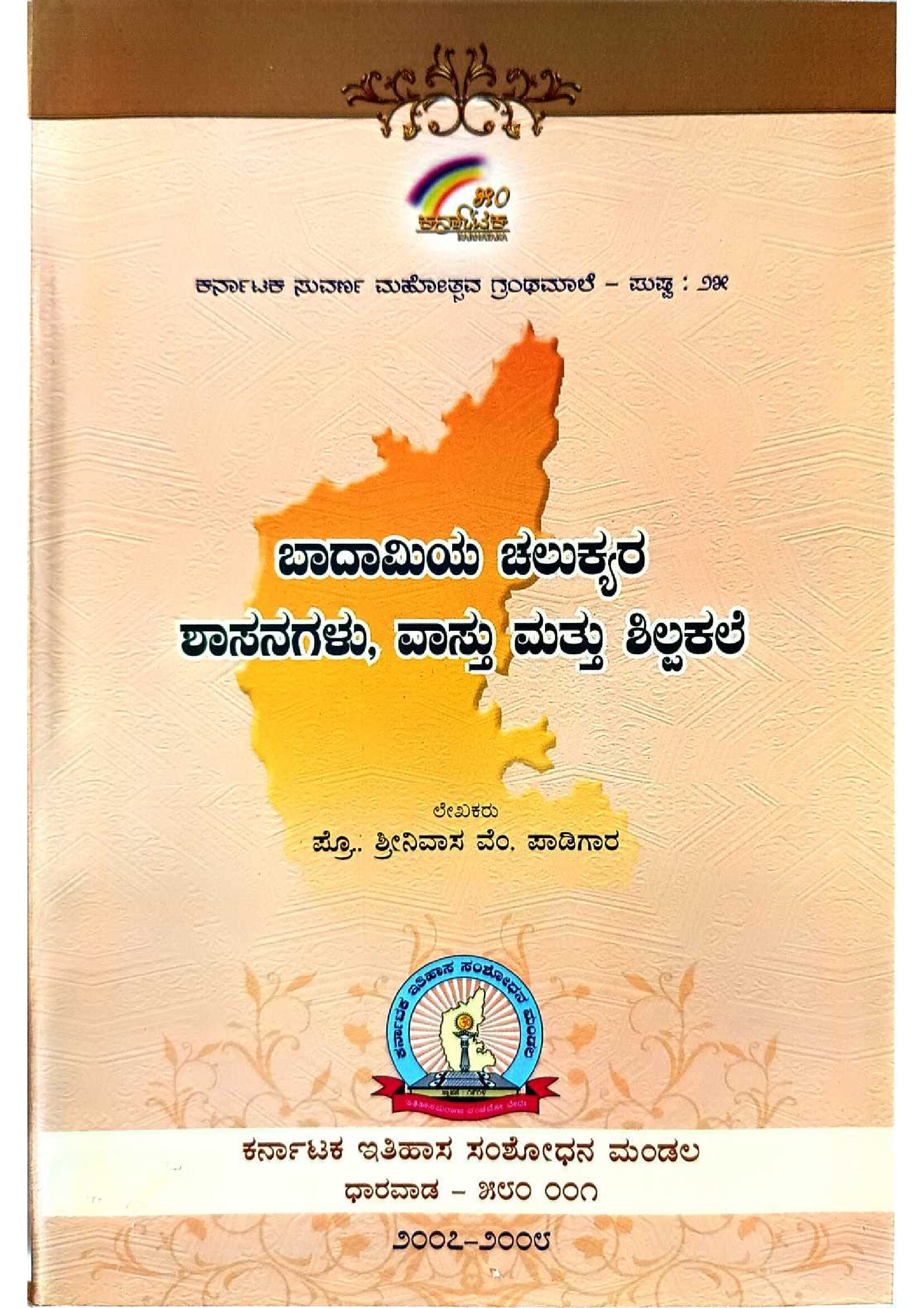
Badami Chalukya Inscriptions, Architecture & Sculpture Book
Badami Chalukya Inscriptions is an impressive and scholarly publication that offers a comprehensive exploration of the epigraphy, architecture, and sculptural achievements of the Badami Chalukya dynasty. Known as one of the most influential early medieval dynasties of South India, the Badami Chalukyas left a profound artistic and cultural legacy, and this book successfully brings that heritage to life through careful research and accessible presentation.
From the very beginning, the Badami Chalukya Inscriptions book establishes its importance by placing the Badami Chalukyas within the broader historical context of Indian civilization. The author skillfully introduces readers to the political and cultural environment in which the dynasty flourished, helping them understand the historical significance of their artistic contributions. This contextual foundation is essential, as it allows readers to appreciate how architecture, inscriptions, and sculpture functioned not merely as artistic expressions but also as instruments of governance, devotion, and social organization.
One of the most valuable sections of the Badami Chalukya Inscriptions book focuses on inscriptions. The detailed examination of stone inscriptions and copper plate grants reveals the administrative efficiency and cultural priorities of the Chalukya rulers. These epigraphic records provide fascinating insights into land grants, temple patronage, religious practices, and royal achievements. The translations and interpretations presented in the book make these inscriptions accessible to modern readers while maintaining scholarly accuracy. This section is particularly useful for students and researchers interested in epigraphy and historical documentation.
The architectural analysis forms another major highlight of the publication. The Badami Chalukya Inscriptions book carefully documents the evolution of temple architecture under the Badami Chalukyas, explaining how their builders experimented with and refined early temple styles. The discussion of rock-cut caves and structural temples demonstrates the dynasty’s innovative spirit and technical mastery. By explaining the structural elements of temples in a clear and organized manner, the author makes complex architectural concepts easy to understand even for readers without a technical background.
Equally captivating is the exploration of sculptural art. The Badami Chalukya Inscriptions book presents the sculptural tradition of the Badami Chalukyas as a harmonious blend of artistic skill and spiritual expression. Detailed descriptions of sculptures depicting various deities, mythological scenes, and symbolic motifs help readers understand the religious and philosophical ideas embedded in the artwork. The author emphasizes how these sculptures served as visual narratives that conveyed sacred stories and moral values to temple visitors.
The inclusion of iconographic analysis further enhances the reader’s experience. By explaining the symbolism of gestures, ornaments, and postures, the book allows readers to interpret the deeper meanings behind the sculptural forms. This approach transforms the reading experience into a journey of discovery, encouraging readers to look beyond surface beauty and engage with the spiritual messages conveyed by the art.
High-quality illustrations play a crucial role in supporting the text. The photographs and diagrams included in the book provide visual clarity and make the discussion more engaging. These images help readers visualize architectural layouts and sculptural details, creating an immersive learning experience. The combination of visual and textual material ensures that the book remains informative as well as enjoyable to read.
Another strength of the publication is its interdisciplinary perspective. The author successfully integrates history, archaeology, art history, and religious studies, creating a holistic understanding of the Badami Chalukya legacy. This interdisciplinary approach makes the book relevant to a wide audience, including historians, archaeologists, students, heritage enthusiasts, and devotees.
The book also highlights the enduring influence of the Badami Chalukyas on later dynasties and regional culture. By tracing the continuation of architectural and artistic traditions, the author demonstrates how the Chalukya legacy shaped the development of South Indian temple art. This long-term perspective adds depth and significance to the study.
In conclusion, Badami Chalukya Inscriptions, Architecture & Sculpture is a remarkable and valuable contribution to the study of Karnataka’s cultural heritage. Combining scholarly rigor with readability, the book offers a thorough and engaging exploration of one of India’s most important dynasties. It stands as an essential resource for anyone interested in history, art, architecture, and epigraphy, and it successfully preserves and celebrates the magnificent legacy of the Badami Chalukyas.
Check other KHRS Books here
Read more about Badami Chalukya architecture
here




![[Top 12] Badami Chalukya Shasanagalu, Vastu mattu Shilpakale(ಬಾದಾಮಿಯ ಚಾಲುಕ್ಯರ ಶಾಸನಗಳು, ವಾಸ್ತು ಮತ್ತು ಶಿಲ್ಪಕಲೆ ) – Inscriptions, Architecture & Sculptures(KHRS)](https://anuvirat.com/wp-content/uploads/2023/12/c63cf132bcb84340ab358eae7beaee5bBofGYqRVneopqg6Z-23-150x150.jpg)
Reviews
There are no reviews yet.