
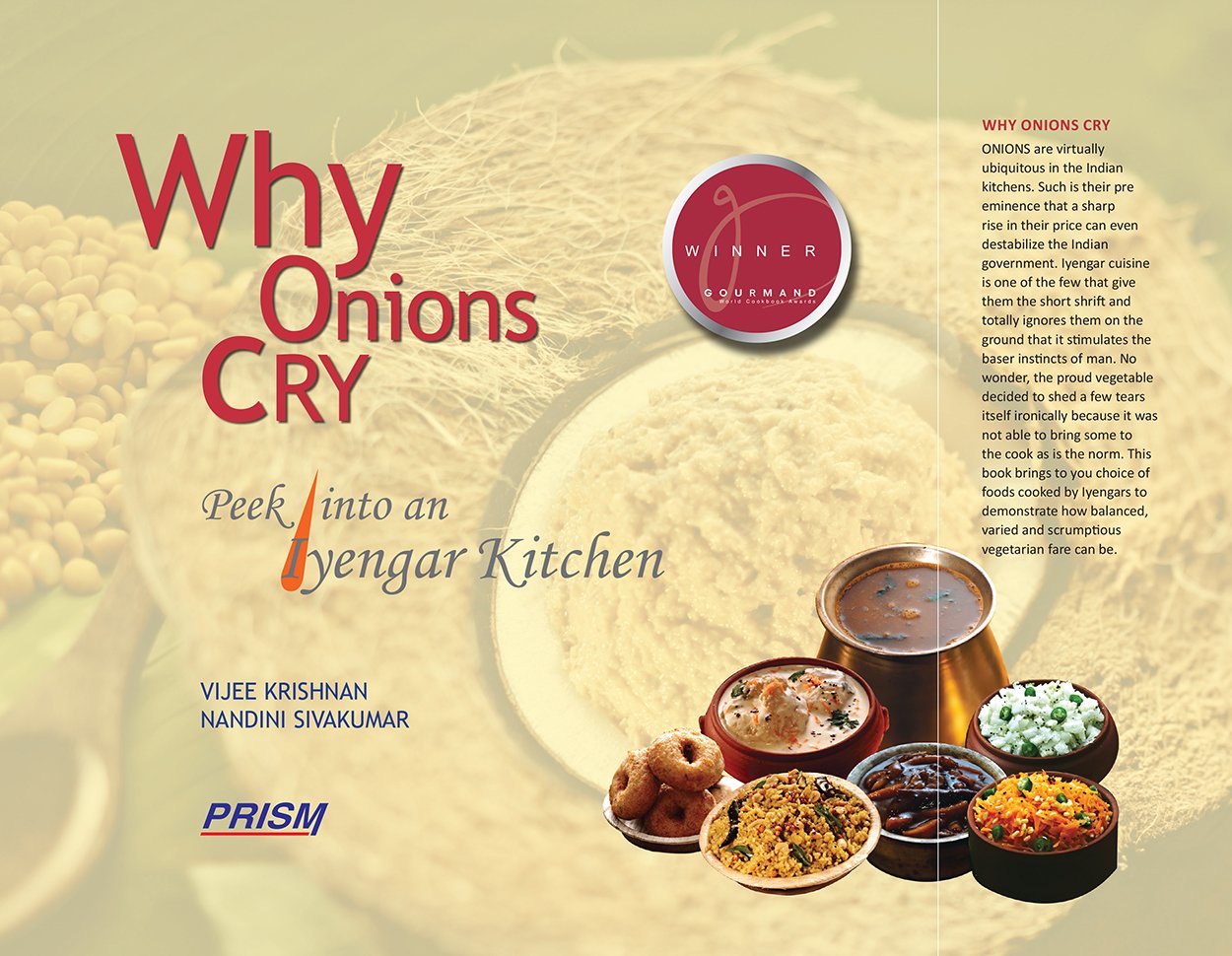
Why Onions Cry Book
Why Onions Cry Book – By Vijee Krishnan and Nandini Sivakumar
₹375.00
Why Onions Cry Book is a witty and thought-provoking book that blends food, culture, humor, and philosophy into a delightful reading experience. Centered around the humble onion—a vegetable so deeply embedded in Indian kitchens that it can influence markets and even politics—the book takes readers on a unique journey through the traditions of Iyengar cuisine, one of the most distinctive branches of South Indian vegetarian cooking.
At first glance, the title itself sparks curiosity. Why would onions cry? The book playfully answers this question by turning the perspective upside down. In most kitchens, onions are a fundamental ingredient, adding flavor, aroma, and depth to countless dishes. However, in traditional Iyengar cuisine, onions are often deliberately excluded based on dietary and philosophical beliefs. This exclusion forms the heart of the book’s narrative, which uses humor and irony to explore food habits and cultural identity.
The author cleverly anthropomorphizes the onion, giving it emotions and a voice. In a humorous twist, the onion “cries” not because it is cut in the kitchen, but because it is left out of it entirely. This imaginative storytelling approach makes the book both entertaining and meaningful. It invites readers to think about how deeply food choices are tied to tradition, belief systems, and lifestyle practices.
Beyond its playful tone, Why Onions Cry Book also serves as a celebration of Iyengar vegetarian cuisine. The book highlights how this culinary tradition has developed a rich and balanced food culture without relying on onions or garlic. It showcases a wide variety of dishes that are nutritious, flavorful, and rooted in ancient culinary wisdom. From simple everyday meals to festive delicacies, the book demonstrates that vegetarian food can be both diverse and satisfying.
One of the key strengths of the Why Onions Cry Book is its ability to educate while entertaining. Readers not only enjoy humorous anecdotes but also gain insights into the philosophy behind Iyengar cooking. The cuisine is influenced by principles of purity, discipline, and balance, and the book explains how these values shape ingredient selection and cooking methods. It also highlights the creativity of cooks who have mastered the art of preparing delicious meals without commonly used ingredients like onions.
The cultural context presented in the Why Onions Cry Book is equally fascinating. It reflects how food practices are deeply intertwined with regional identity, religious beliefs, and historical traditions. By focusing on Iyengar cuisine, the book offers a window into a unique culinary world that has preserved its authenticity over generations. It also encourages readers to appreciate diversity in food habits across different communities.
Another engaging aspect of the book is its storytelling style. The narrative is light, conversational, and filled with wit. It makes complex cultural ideas easy to understand and enjoyable to read. The humor ensures that the book never feels heavy or academic, even when discussing tradition and philosophy. Instead, it feels like a friendly conversation about food and life.
Why Onions Cry Book also subtly addresses modern debates about food choices, dietary restrictions, and culinary innovation. It reminds readers that there is no single “correct” way to cook or eat. Every tradition has its own logic and beauty, and understanding these differences can lead to greater appreciation and respect for cultural diversity.
The Why Onions Cry Book’s exploration of vegetarian cuisine is especially relevant in today’s world, where plant-based diets are gaining popularity. It demonstrates that vegetarian food, when prepared thoughtfully, can be rich, varied, and deeply satisfying. Iyengar cuisine serves as a perfect example of how tradition and nutrition can go hand in hand.
In conclusion, Why Onions Cry Book is more than just a food book—it is a humorous, insightful, and culturally rich exploration of culinary identity. By giving voice to the onion and showcasing the brilliance of Iyengar cooking, it transforms everyday ingredients into a story worth savoring. It is an engaging read for food lovers, cultural enthusiasts, and anyone who enjoys a blend of humor and tradition on the same plate.
| ISBN13 | 9788172868123 |
| Binding | PAPERBACK |
| Author | VIJEE KRISHNAN |
| Language | ENGLISH |
| Publisher | PRISM BOOKS PVT LTD |
| Published Year | 2013 |
| Country of Origin | India |
Check other books here
Read more on Onions here
Why Onions Cry Book – By Vijee Krishnan and Nandini Sivakumar
| Weight | 400 g |
|---|



Reviews
There are no reviews yet.